The Slow Path participates in affiliate marketing programs. Specifically, this means we may earn a commission if you purchase products or services through any links—at no extra cost to you. Subsequently, these partnerships help support our work and allow us to continue creating high-quality content focused on slow, sensory-friendly, and low-stimulation travel. We only recommend products, services, and experiences that align with our mission of comfort, ease, and mindful exploration. Your trust is our priority, and we are committed to transparency in all our recommendations.
Quick Picks
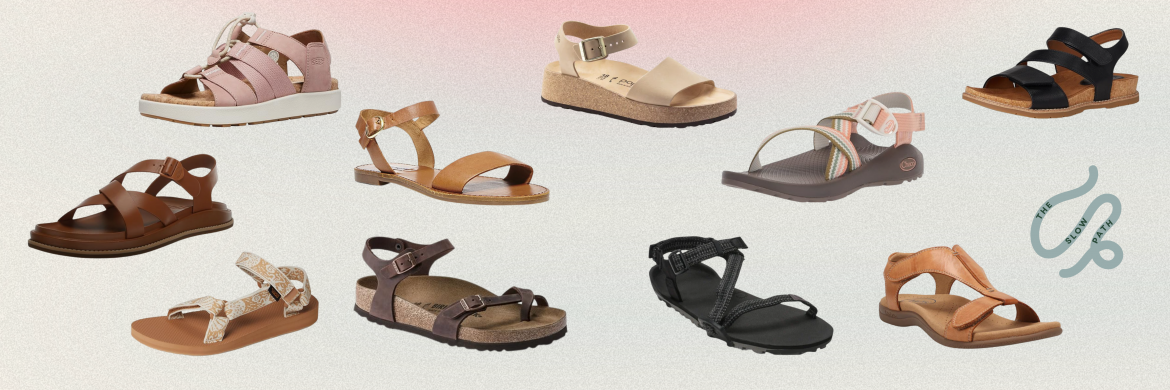
Updated: Jan 2026. These picks prioritize walkability (15–25k steps/day), no between-toe straps, and hot-weather comfort.
- Best overall for city walking (✅ Tested) – Taos The Show Check price →
- Best dressy sandal that still walks (✅ Tested) – Taos The Show (same pick) Check price →
- Best cushioned (✅ Tested) – Keen Elle Sandals Check price →
- Best for wide feet (✅ Tested) – Keen Elle Sandals (same pick) Check price →
- Best budget (✅ Tested) – Sofft Sandal Check price →
- Best for barefoot/ minimalist (✅ Tested) – Xero Z-trek Check price →
| Sandal | Tested | Footbed Material | Support | Straps | Handles 15k+ Steps? | Price |
| Taos The Show | Yes | Antimicrobial leather | Medium | Good | Yes | Check price → |
| Keen Elle Sandals | Yes | Cork | Medium | Good | Yes | Check price → |
| Birks | Yes | Cork/ Leather | Too High | Depends | No | Check price → |
| Taos MVP & Trulie | Research | Cork/ Leather | Too High | Good | No | Check price → |
| Chacos Townes | Yes | Plastic | Medium | Good | No | Check price → |
| Chacos Z | Yes | Plastic | Medium | Good | No | Check price → |
| Keens | Yes | Plastic | Medium | Good | No | Check price → |
| Sofft | Yes | Cork | Medium-low | Good | No | Check price → |
| Pons | Yes | Leather | Low | Poor | No | Check price → |
| Rainbows | Yes | Leather | Low | Poor | No | Check price → |
| Teva | Yes | Plastic | Low | Good | No | Check price → |
| Xero Z-Trek | Yes | Plastic | Barefoot | Good | Depends | Check price → |
My Sandal-Seeking Pursuit
All in all, finding the best sandals for walking 2026 can be a challenge, especially if you prioritize comfort, support, and style. Whether you’re exploring a new city, strolling through a local market, or enjoying a casual night out, the right pair of sandals can undoubtably make all the difference.
If you’ve read my previous blogs, you know I’m a high-maintenance girly when it comes to foot care! We all have unique shoe needs, and for me, dealing with an Achilles tear, collapsed arches, and now dyshidrotic eczema on the bottoms of my feet, consequently my feet require extra attention and care. Above all, finding the right footwear is essential for being able to enjoy any trip.
After testing multiple options, I’ve narrowed down my top picks based on key criteria that work for me but will benefit anyone looking for a supportive walking sandal and to prevent problems down the line. Generally, this includes a cork or leather footbed, cushioned support, secure straps in the right places, and a stylish design. Below, you’ll find my top recommendations and what to avoid based on personal experience.
TRAVELING SOON?


My Rating Rubric for Finding the Best Sandals for Walking
Based on recommendations from physical therapists and dermatologists, I evaluate sandals using the following criteria:
- Sole, Footbed and Strap Material: Natural cork or leather footbed materials are best for foot skin health and moisture-wicking properties. A natural strap material helps reduce irritation and potential blistering on the tops of toes.
- Walkability:
- Sole Flexibility: Important for maintaining a natural stride and foot mechanics.
- Support: Adequate arch and heel support and cushioning to ease foot and leg fatigue when spending hours exploring cities.
- Straps: A strap around the toes and a strap around the ankle to protect musculoskeletal health. No toe-specific straps (toe loops overwork specific muscles and ligaments) and no between-the-toe straps (to minimize irritation).
- Style: A versatile design to serve multiple purposes, allowing travelers to pack just one pair for various occasions.
Best Sandals for Walking 2026
Best Sandals for Walking 2026
The Winners: Good Material and Good Walkability
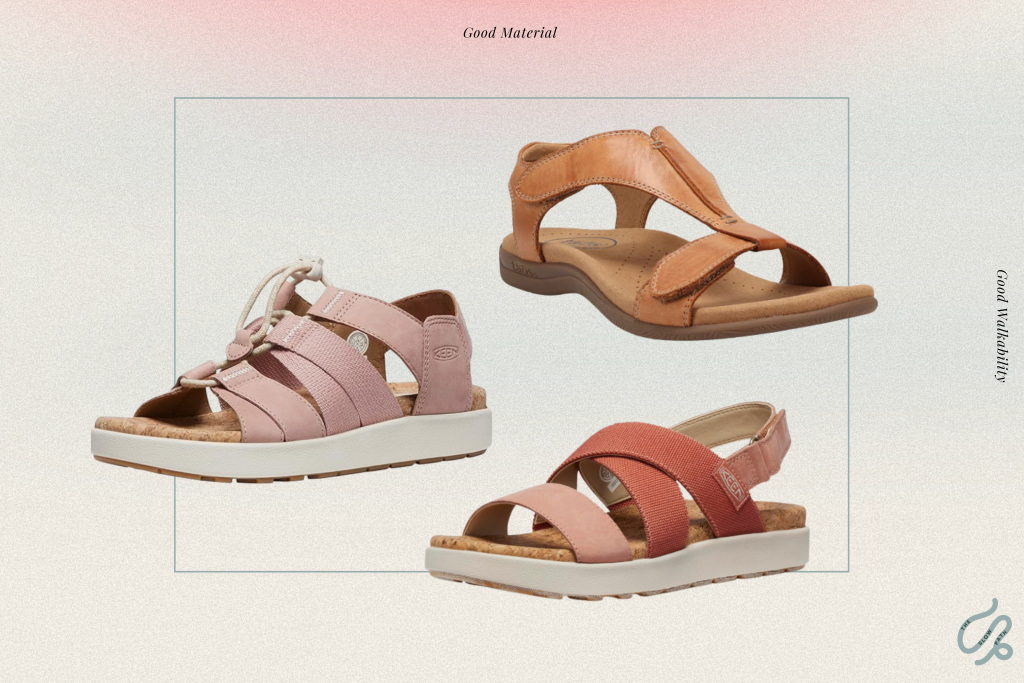
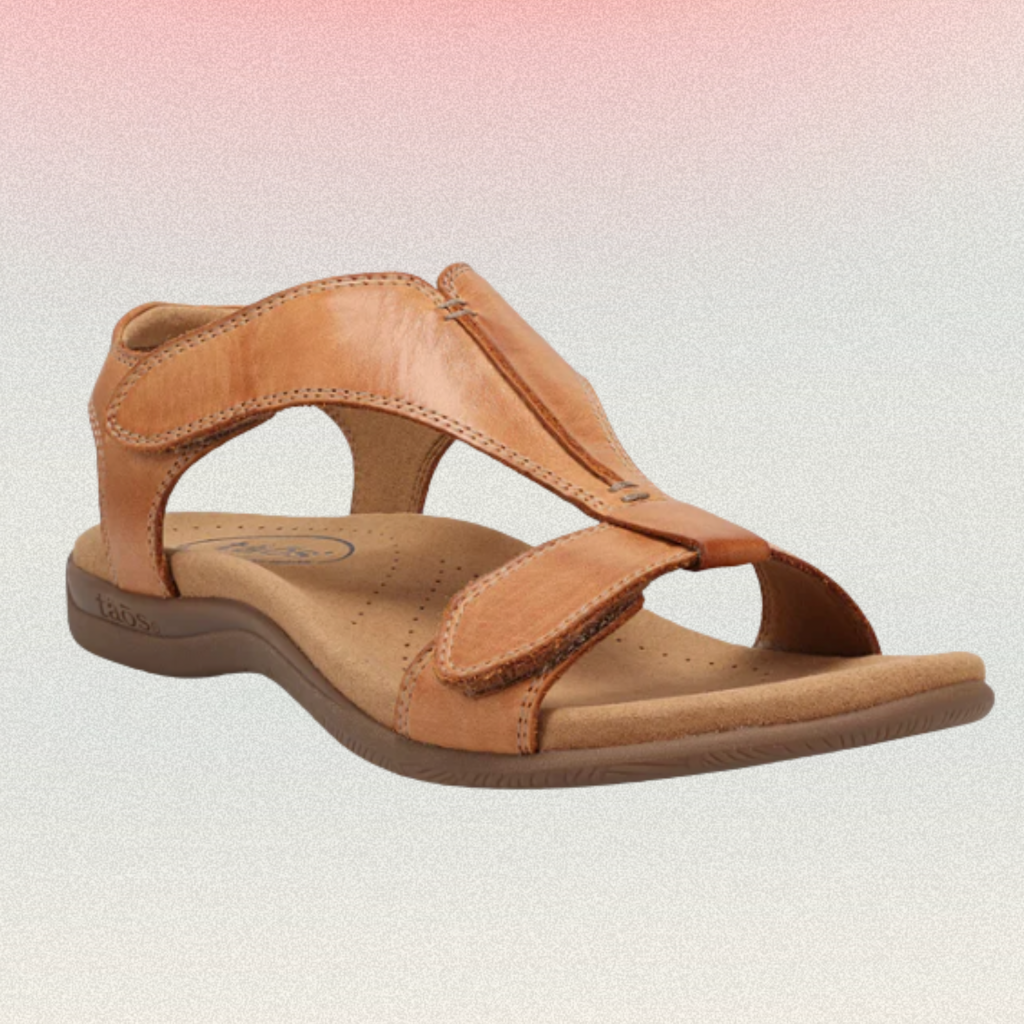
Best overall for all-day city walking (✅ Tested): Taos The Show Sandal
Verdict: This is for you if you want a sandal that can handle long, walking-heavy travel days without toe-thong irritation—and still looks cute enough for dinners. Skip if you hate a more “structured/supportive” feel or prefer ultra-minimal sandals.
Why it works:
- Support + cushion that holds up: strong arch support and cushioning for long days.
- Less swampy footbed: leather footbed helps reduce sweat buildup (big deal for blister-prone feet).
- Walkable sole + stable straps: flexible sole that moves with your gait + secure straps without a toe loop.
- Bonus: the footbed has antimicrobial/cooling properties + it’s built for shock absorption (helpful on hard city pavement).
Sizing & fit notes
Width: tends to work well for average to slightly wider feet (strap adjustment).
Straps: secure and stable; adjust until your heel doesn’t lift.
Break-in: usually light (a few wears), especially if your skin is sensitive.
Best trip types
City walking: this is great sandal for this type of trip.
Coastal / humid: leather footbed helps with sweat comfort.
Dinners / dressy: one of the rare “cute but truly walkable” options.
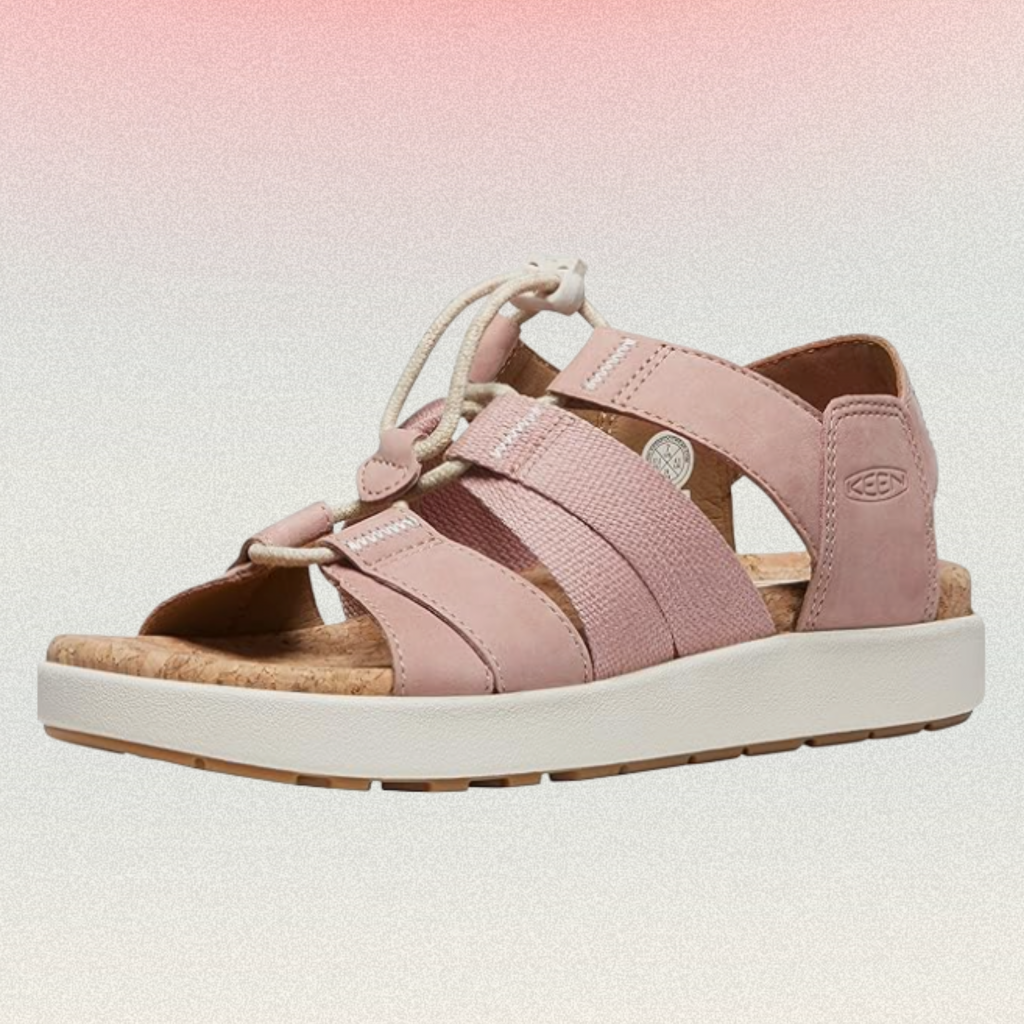
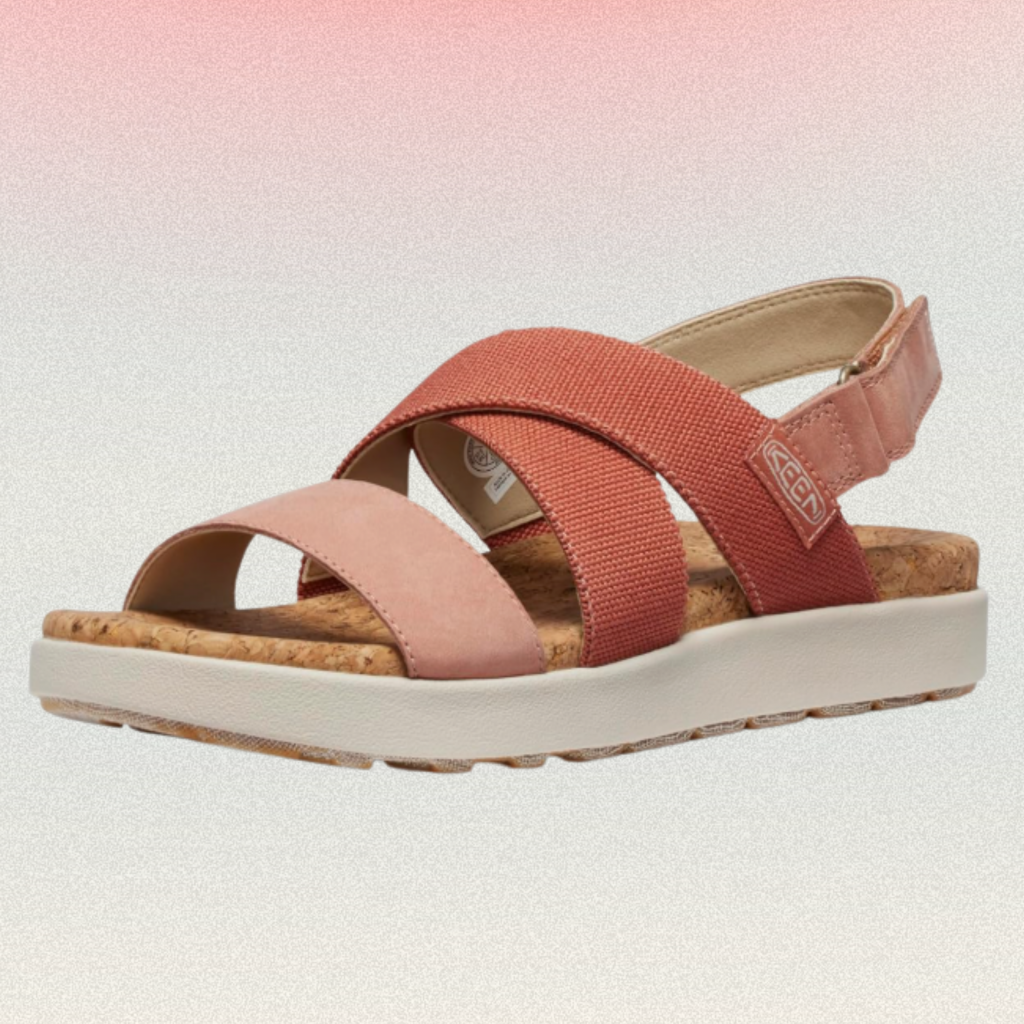
Best cushioned + roomier straps (✅ Tested): Keen Elle Sandals
Verdict: This is for you if you want more cushion, a roomier/secure strap feel, and a supportive footbed for long walking days. Skip if you need a very flat/minimal sole or dislike a slight “forward stance” feel.
Why it works:
- Cork footbed with molded arch support (supportive without feeling rigid).
- Secure straps + snug fit (great if your foot slides in sandals).
- Light, flexible cushioning that springs back after each step (good for pavement).
- Comfort details: soft leather strap lining + a wider strap that feels more secure around the ankle area.
- Posture feel: slight heel lift that creates a more forward stance (some people love this).
Sizing & fit notes
Width: often feels more forgiving/roomy than dress sandals.
Straps: adjust for zero heel lift + no rubbing at the ankle strap edge.
Break-in: usually easy, especially with the soft lining.
Best trip types
City walking: especially if you like a bit more cushion.
Coastal / humid: Usually yes; strap comfort is a big plus.
Dinners / dressy: depending on the style
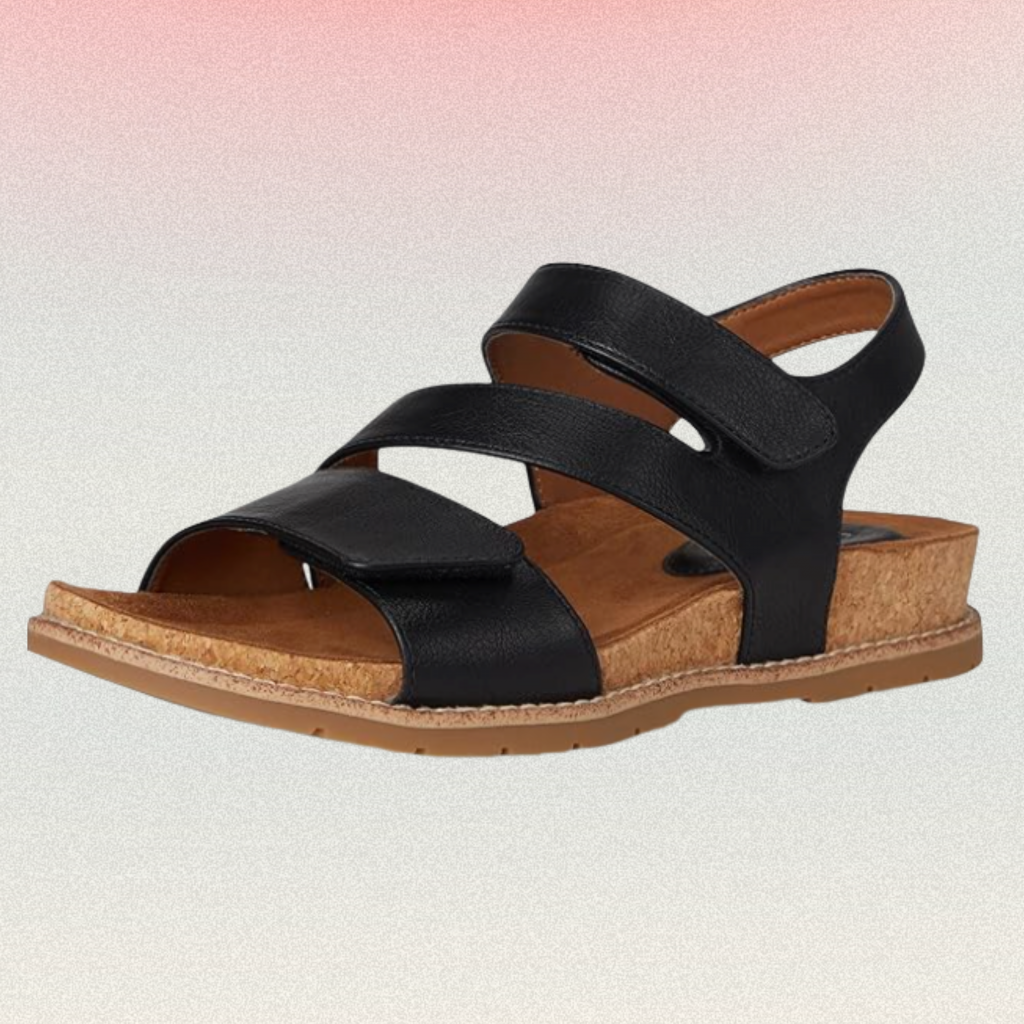
Best budget option that still feels “put together” (✅ Tested): Sofft
Verdict: This is for you if you want a more polished-looking sandal at a lower price point and your travel days are more like moderate walking + dinners (not 25k-step marathons). Skip if you need serious arch support for long city days or you’re very blister-prone.
Why it works
- Looks elevated for the price: reads “cute + intentional,” not sporty.
- Comfortable for normal travel mileage: good for errands, light sightseeing, dinner walks.
- Good “second sandal”: pairs well with a true walking sandal so you’re not wearing the same thing every day.
Watch-outs
- Not my first pick for 10–25k step days (less of a “workhorse” support feel).
- The bottoms do feel like the support gives out on especially long days.
Sizing & fit notes
- Width: tends to feel standard (not my top wide-foot pick).
- Straps: depends on the style—some are more adjustable than others.
- Break-in: usually light, but don’t debut them on your longest walking day.
- If between sizes: choose the size that prevents toes from hanging off and avoids heel lift.
Best trip types
- City walking (10k–25k steps): Better for moderate days than “all-day pavement”
- Coastal / humid: Fine, but not my top “sweaty-feet” sandal
- Dinners / dressy: Yes
- Light trails: No
Best barefoot/minimalist + packable (✅ Tested): Xero Z-Trek
Verdict: This is for you if you want a minimal, lightweight sandal that packs small, works in water, and feels “barefoot-ish” while still being secure. Skip if you need a lot of cushion/arch support for long city pavement days or you’re sensitive to thin soles.
Why it works
- Ultra packable: takes up almost no space (great as a backup travel sandal).
- Secure straps: more stable than most minimal sandals, especially for varied terrain.
- Versatile: handles wet conditions, casual hikes, beach days, and “walk to dinner” situations easily.
Watch-outs
- Minimal cushion = pavement can feel harsh after long distances if you’re used to support.
Sizing & fit notes
- Width: often works well for wider feet because of the open/adjustable strap system.
- Straps: fully adjustable—take time to dial in the fit so there’s no rubbing.
- Break-in: usually low, but you should still do a few test walks before a trip.
- If between sizes: go with the size that gives a little extra length (to avoid toe edge rub).
Best trip types
- City walking (10k–25k steps): Great if you love minimal shoes and your feet have been trained to use barefoot shoes; not ideal if you need cushion.
- Coastal / humid: Good wet/hot weather versatility.
- Dinners / dressy: It’s more sporty/minimal than polished, but sometimes the all black pair can blend in unnoticed.
- Light trails: Yes, one of the best use cases for this sandal.
Avoid These Features (If You’re Walking 10–25K Steps/Day)
If you’re planning long city days, your sandal doesn’t need to be “cute.” It needs to be stable, flexible, and blister-resistant. Here are the features that consistently fail me on walking-heavy trips:
1) Between-the-toe or over-the-toe straps
Even when they look comfortable, toe posts often become a hot spot after a few miles—especially in heat, humidity, or when your feet swell.
2) Toe loops (the “secure” strap that isn’t worth it)
Toe loops can feel stable at first, but on long days they can create friction points you don’t notice until you’ve already committed to 18,000 steps.
3) Smooth synthetic/plastic footbeds (aka “sweat = slip = blisters”)
If your feet get even a little sweaty, slick footbeds turn into a blister factory. I do better with materials like leather or cork that breathe and don’t get swampy.
4) Very stiff soles with minimal flex
A rigid sole can feel “supportive” in the store, but over a full travel day it can cause fatigue because your foot can’t move naturally. Look for a sole that has some flex while still providing arch support.
5) No ankle support / sandals that rely on toe grip
If you have to “claw” with your toes to keep the sandal on, your feet will tire faster and rubbing increases. For travel, I prefer sandals that feel secure without gripping.
Common sandals that often fall into these traps (in my experience)
These are popular for a reason, but they’re not my pick for walking-heavy trips:
- Birkenstock-style sandals: great quality, but often too stiff for all-day walking (for me).
- Chacos-style sandals: super durable, but the synthetic footbed can be rough for sweaty, blister-prone feet.
- Fashion sandals (thin sole / no ankle strap): cute, but usually not built for long mileage.
(If you love any of the above, no shade. This is just what consistently fails for my feet on travel days.)
What I look for instead
- Secure straps (without toe loops or toe-thongs)
- Leather or cork footbed for heat + sweat comfort
- Arch support + cushioning
- A sole that flexes enough to move naturally
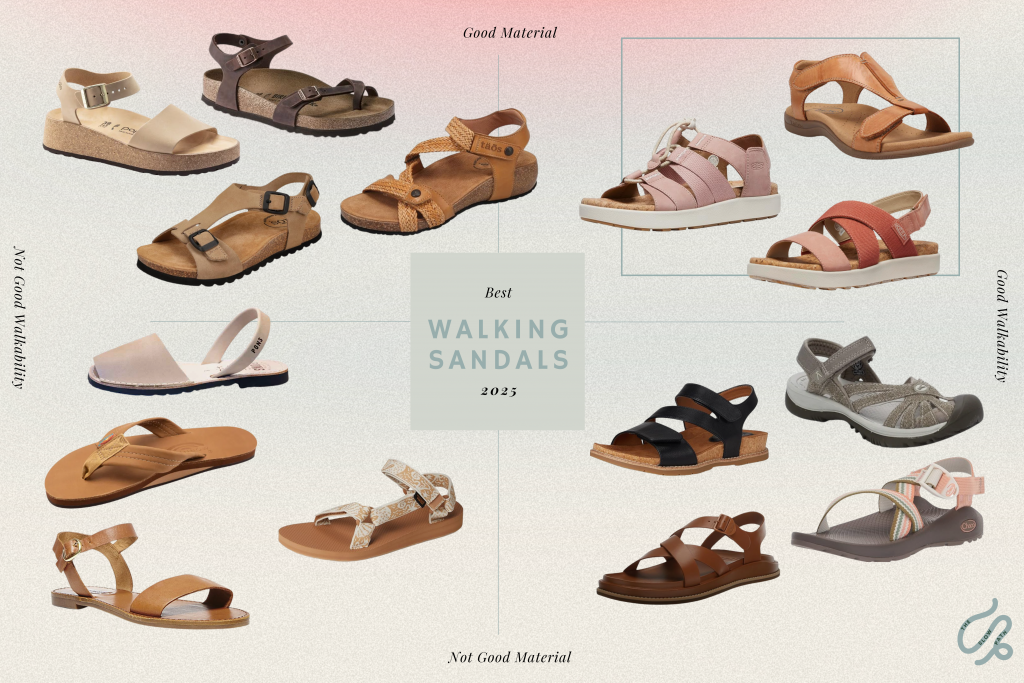
Great Quality but for Minimal Walking: Good Material but Low Walkability
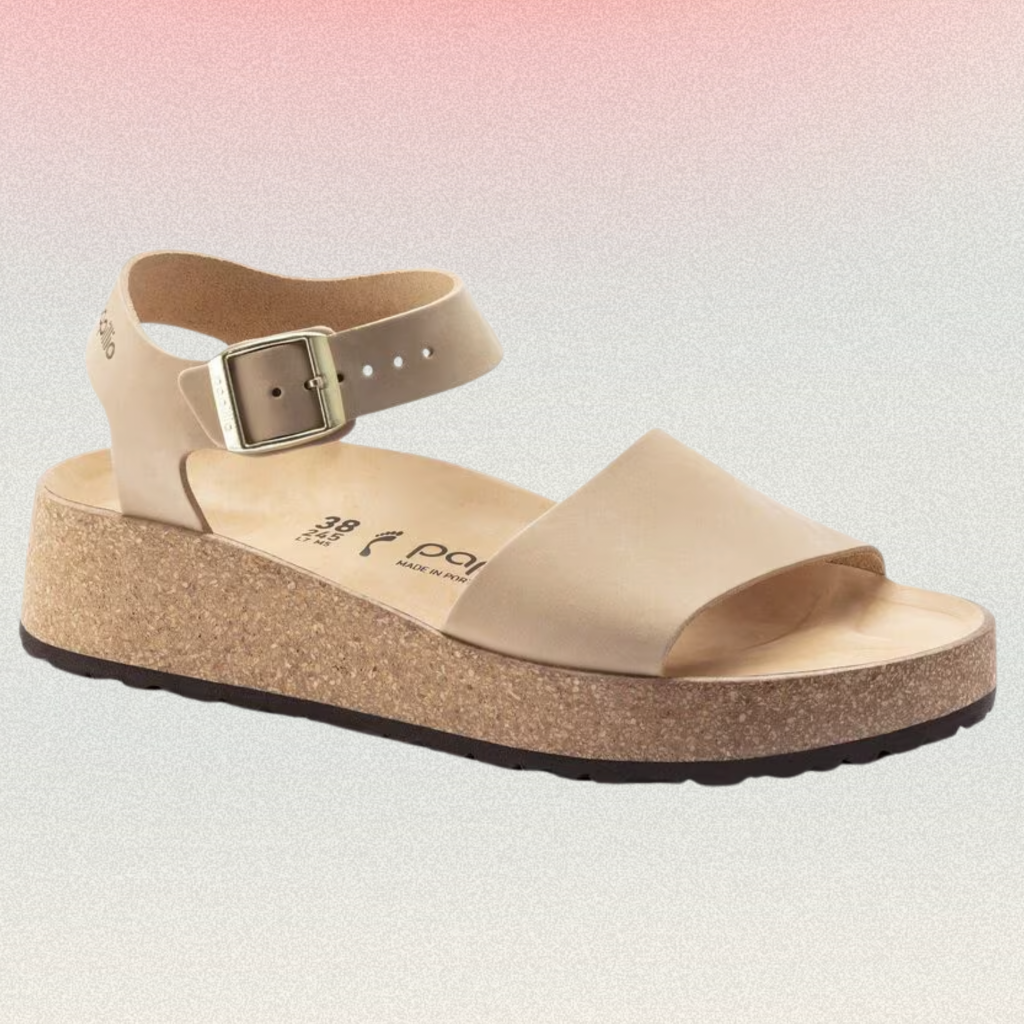
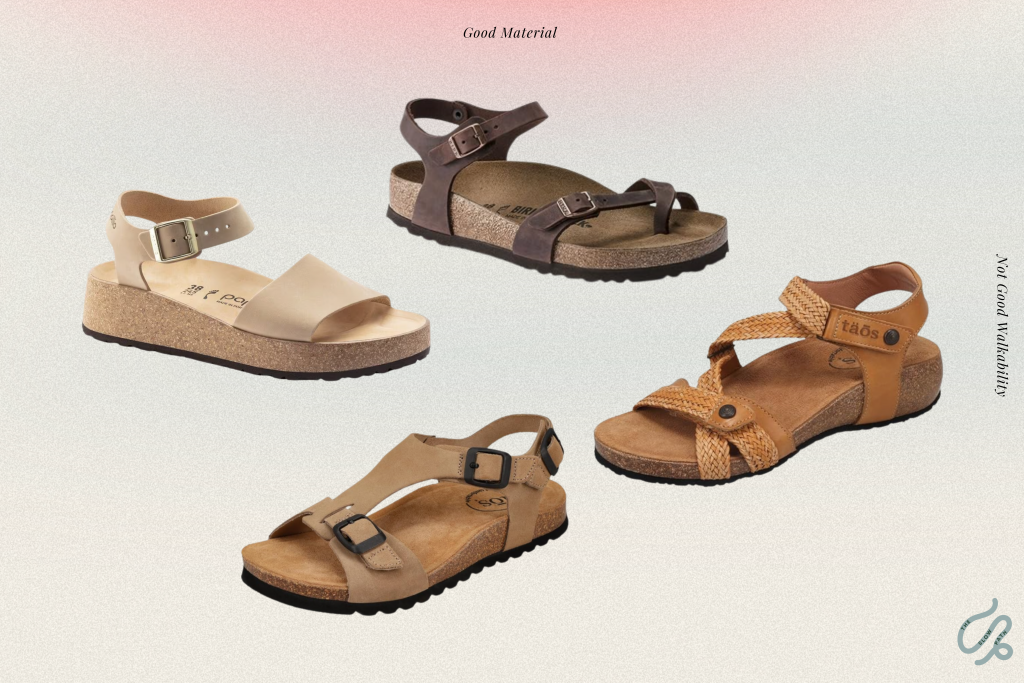
Birkenstock & Papillo by Birkenstock: These are gorgeous, high-quality shoes, but with how stiff the sole is, especially on long walks (+20k steps / day for several days back-to-back) these can impair your gait’s natural stride. The reason why that is bad is because it can have lasting effects on your leg muscles, causing knots or atrophy, and your overall posture and alignment.
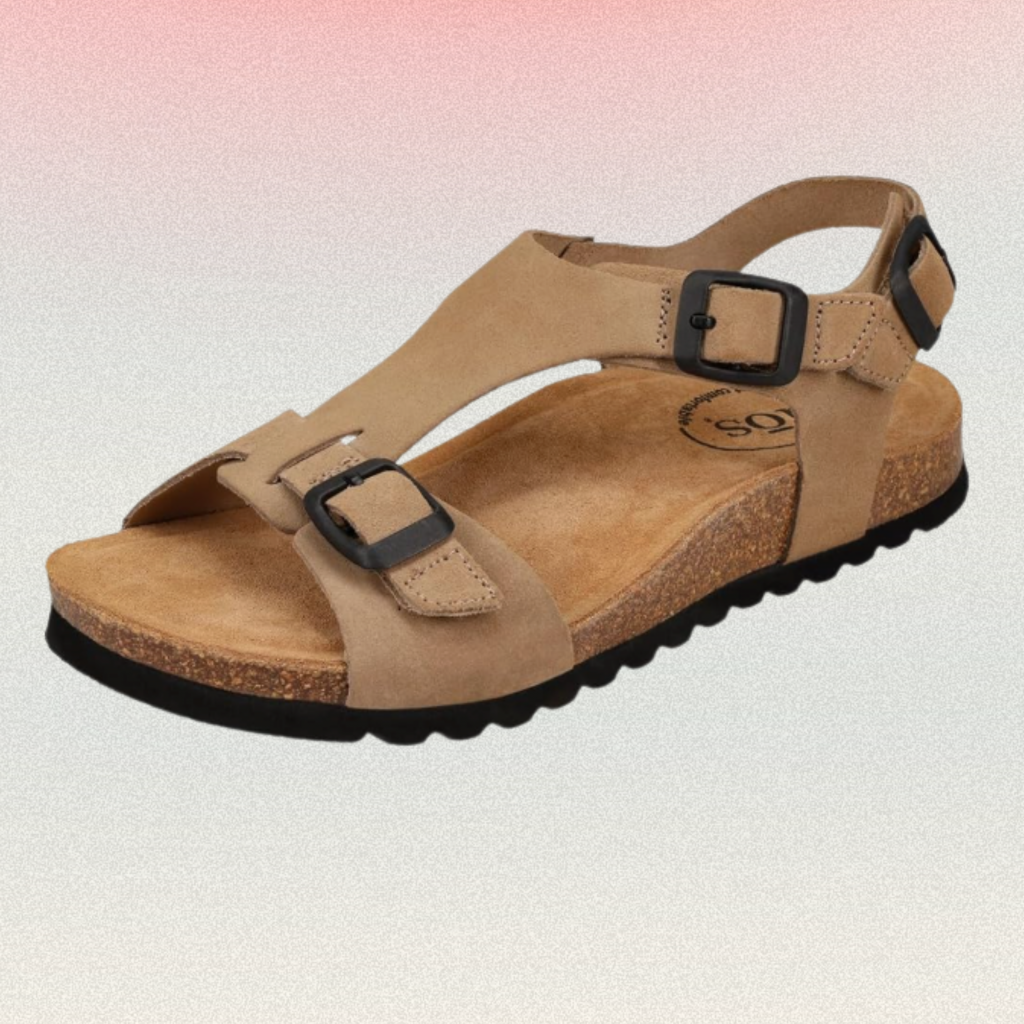
MVP: The Taos MVP sandal, as another cork-bed sandal, comes up against the same problem as the Birkenstocks above. Chiefly that there is not enough flexion in the sole.
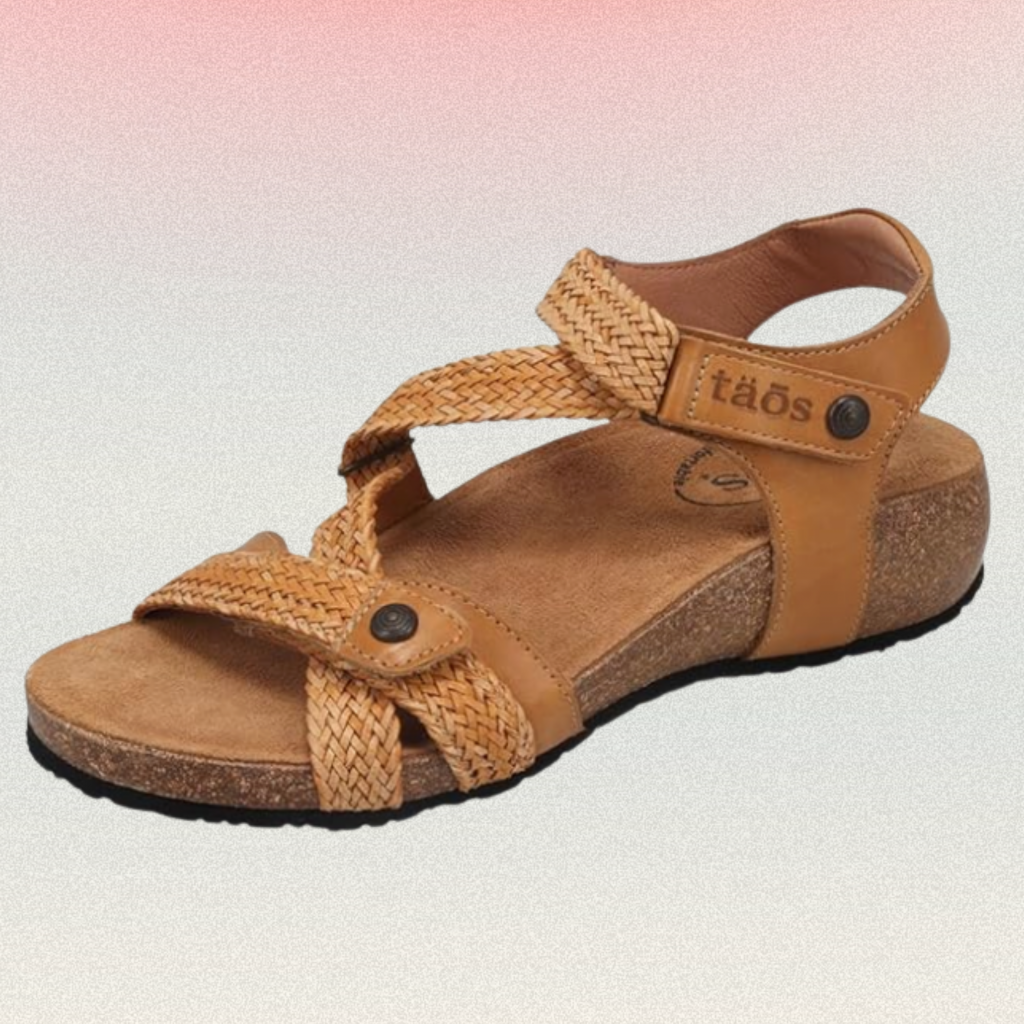
Trulie: The Toas Trulie sandal‘s toe strap closure caused intense irritation on the tops of my toes. At this point I’ve learned that if a shoe isn’t comfortable on the first try-on, it won’t get any better, and I don’t want blisters forming on the tops of my toes on the first day of a long trip!
Made for Walking but Not Proactive for Long-term Foot Well-being: Good Walkability but Low Material Considerations
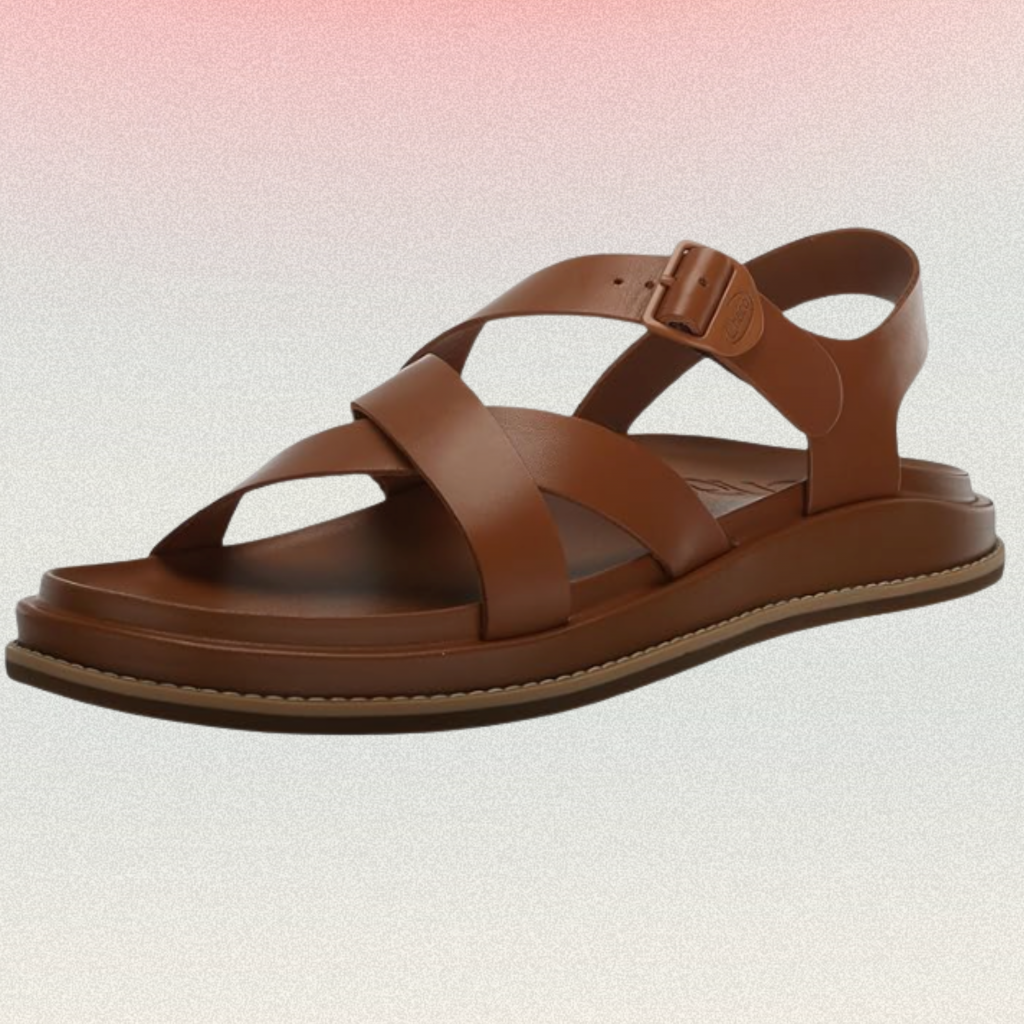
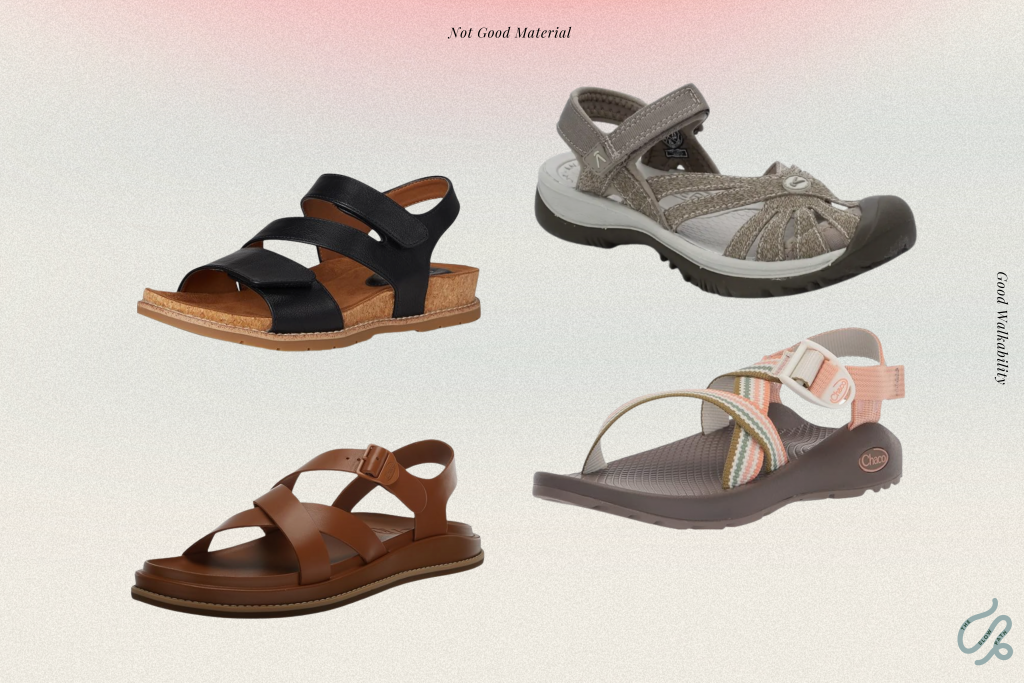
Townes: Historically, this shoe used to be my favorite walking sandal when it was made form suede and leather. Chacos swapped the natural fabrics for what they call “a vegan-friendly footbed.” Mostly, it seems like a nice way to refer to plastic. That being said, with this new plastic bottom, the shoes are unsustainable for keeping away moisture from the skin.
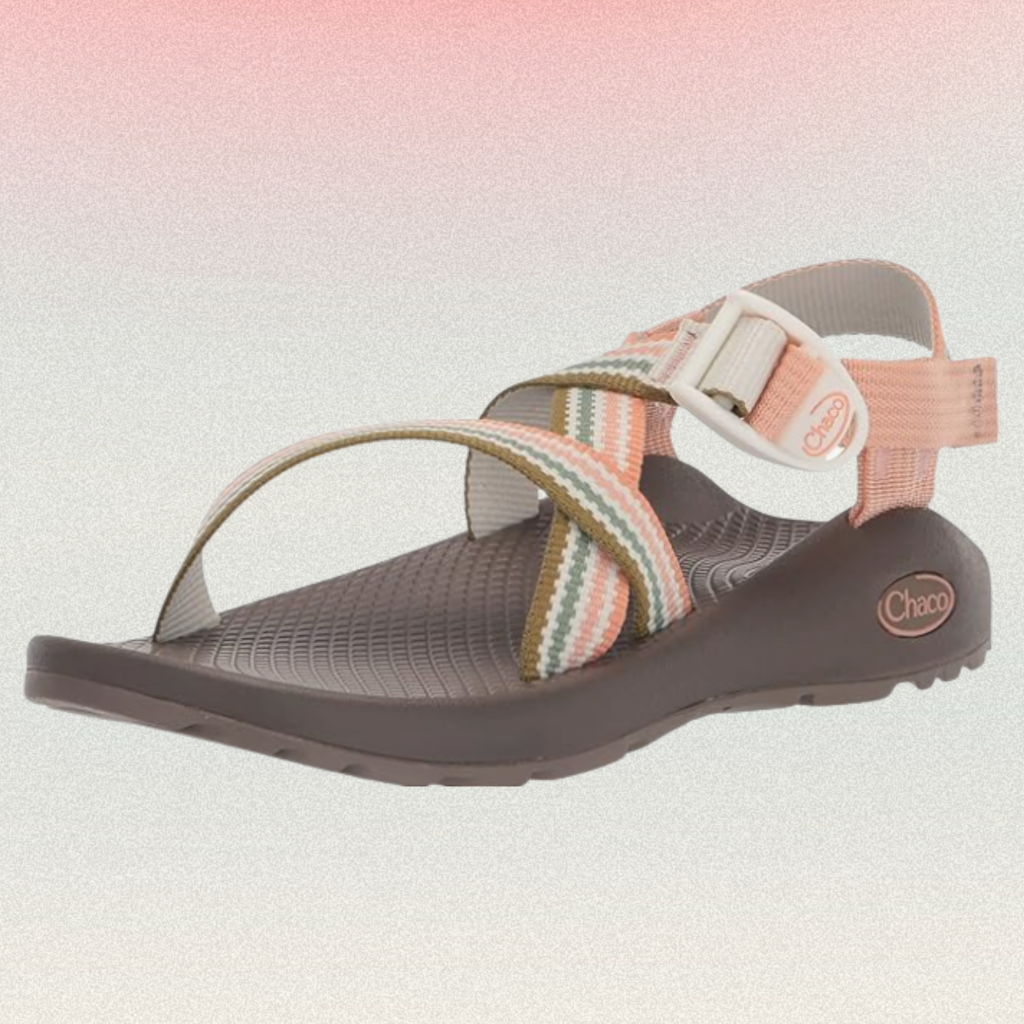
Chacos Z: Chacos main line, their Z shoes, while having a great arch support, due to the plastic bottom, can easily cause blistering and has the same moisture-problem as any plastic footbed. I used these on a trip to Ecuador and the Galapagos, and dealt with managing blisters the entire time.
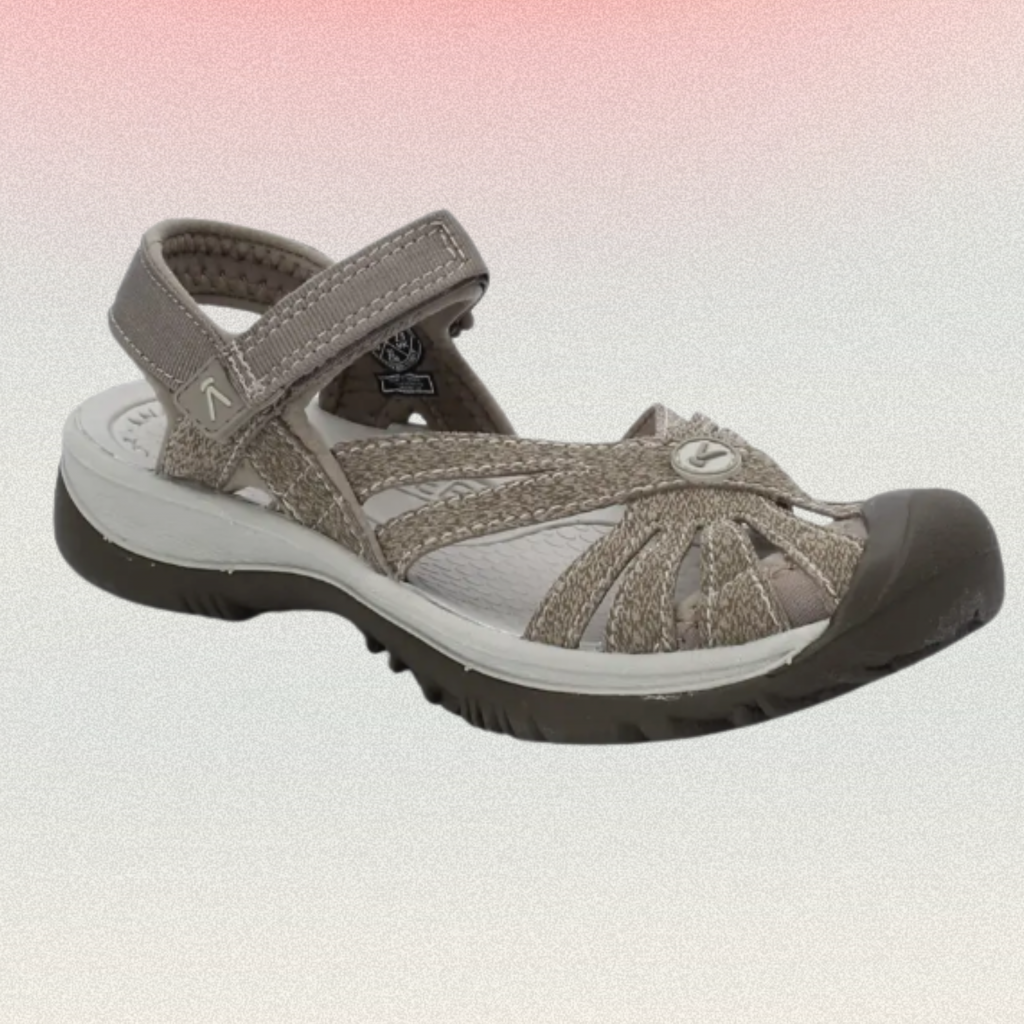
Keens: I have gotten a lot of wear and tear out of my pair on many camping trips and hikes throughout California and Oregon. While they do have some great features for support, once again, the plastic bottoms, while a waterproof feature, are counterintuitive to foot’s skin health.
Sofft: I chose a Sofft sandal for a two-week road trip through Spain. While they were the best I could find leading up to that trip, I quickly noticed within a day or two that the cork footbed felt hollowed out underneath my food and that there was no support upholding my foot. Due to the low-quality footbed, the Söfft line has gone in this ranking quadrant.
Cute but Impractical: Low Walkability Sandals
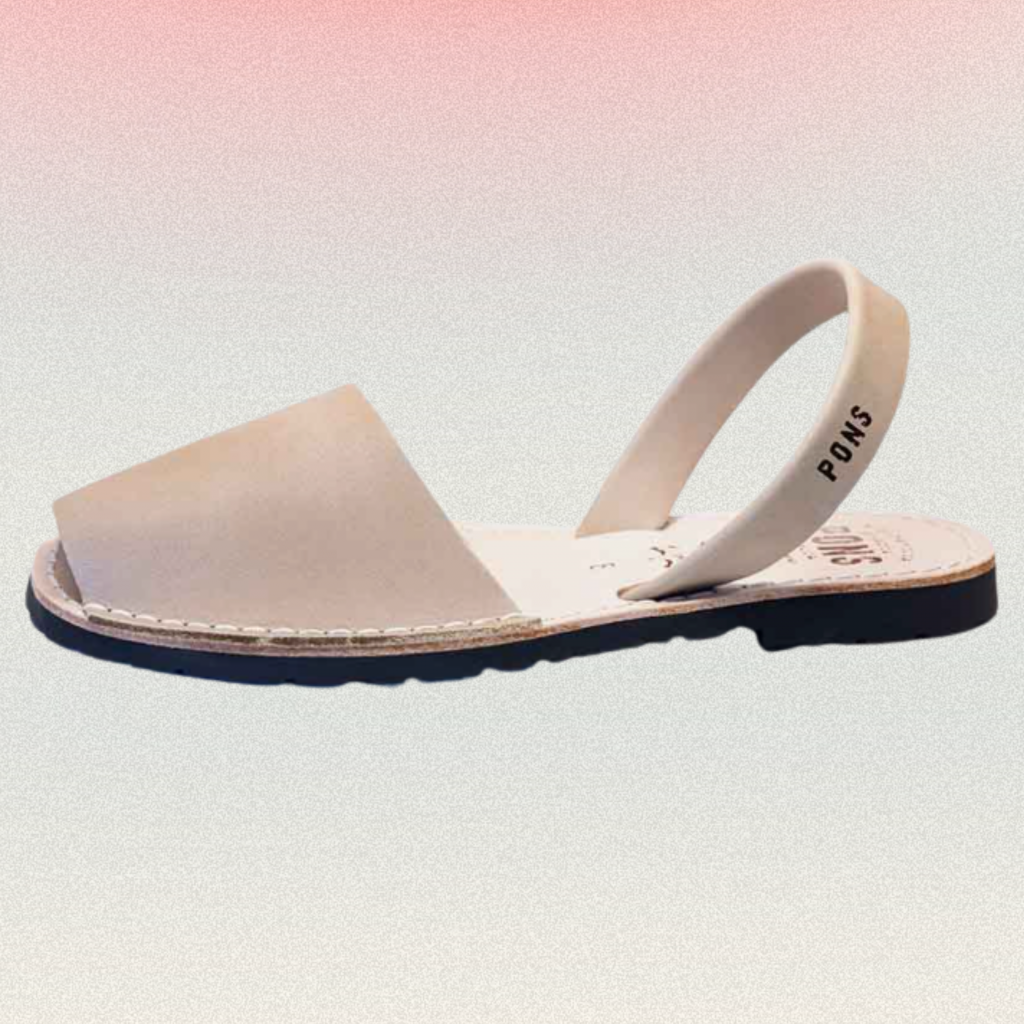
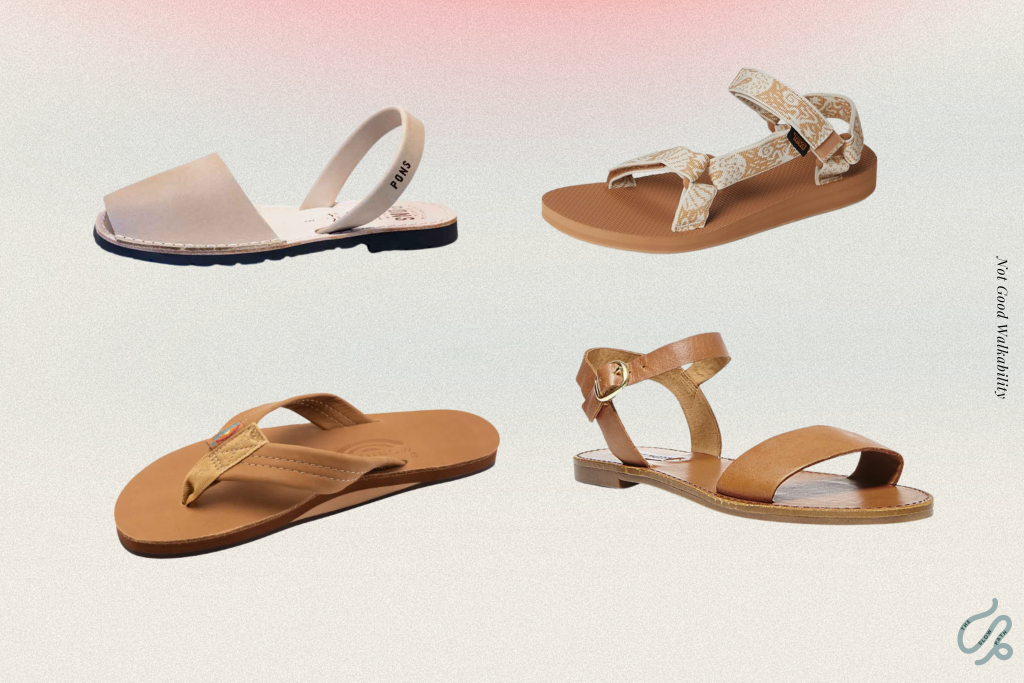
Pons: I have loved my Pons so much that I have worn through the bottom of two pairs. Suffice to say, I have spent a lot of time walking in these shoes. Some of the big downsides you can see right away is there is no arch support, and no strap around the ankle, which creates really low walkability. They are super cute, and can be very comfy, so if that meets your criteria, it is a shoe I have loved.
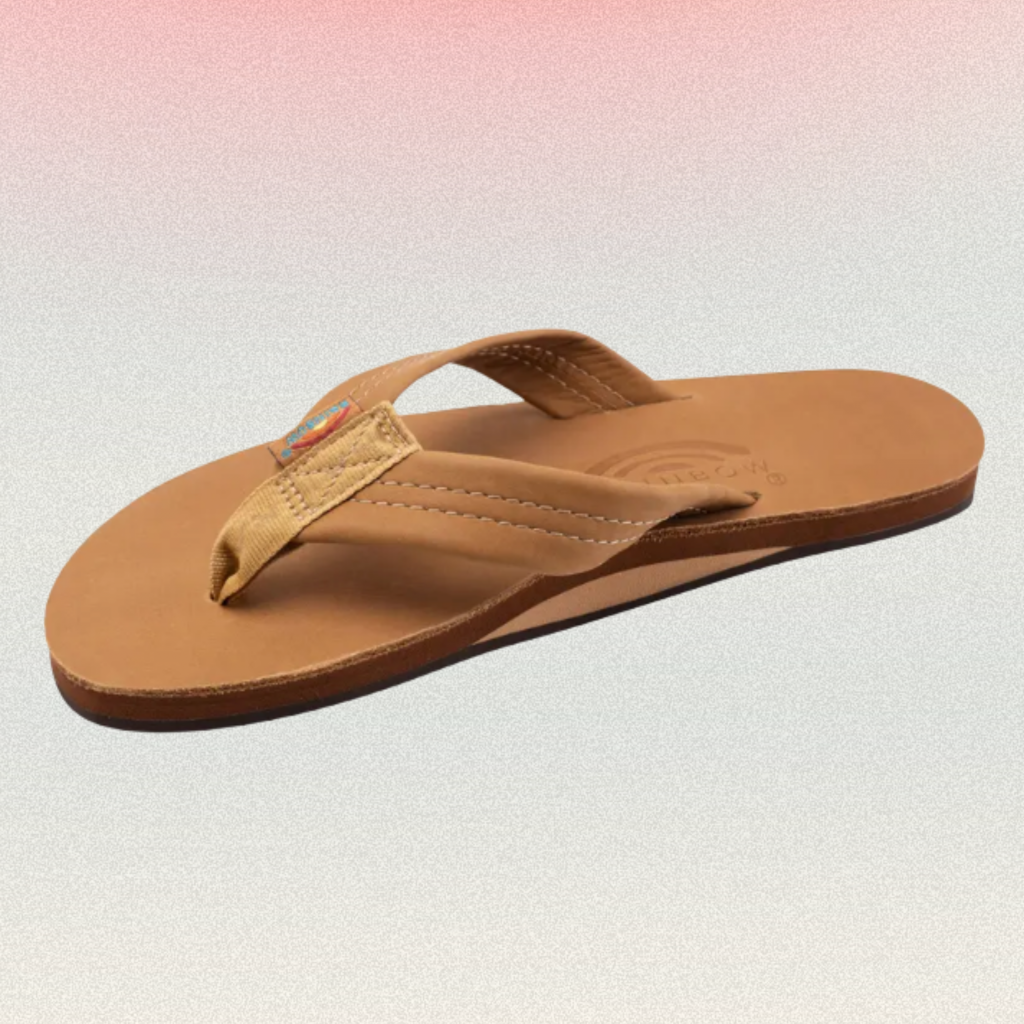
Rainbows: Living on the California Coast, I spent about a whole year in almost no other shoe than Rainbows. While they are cure and the leather breaks in nice, without ankle support, this falls into the category of not made for long walks.
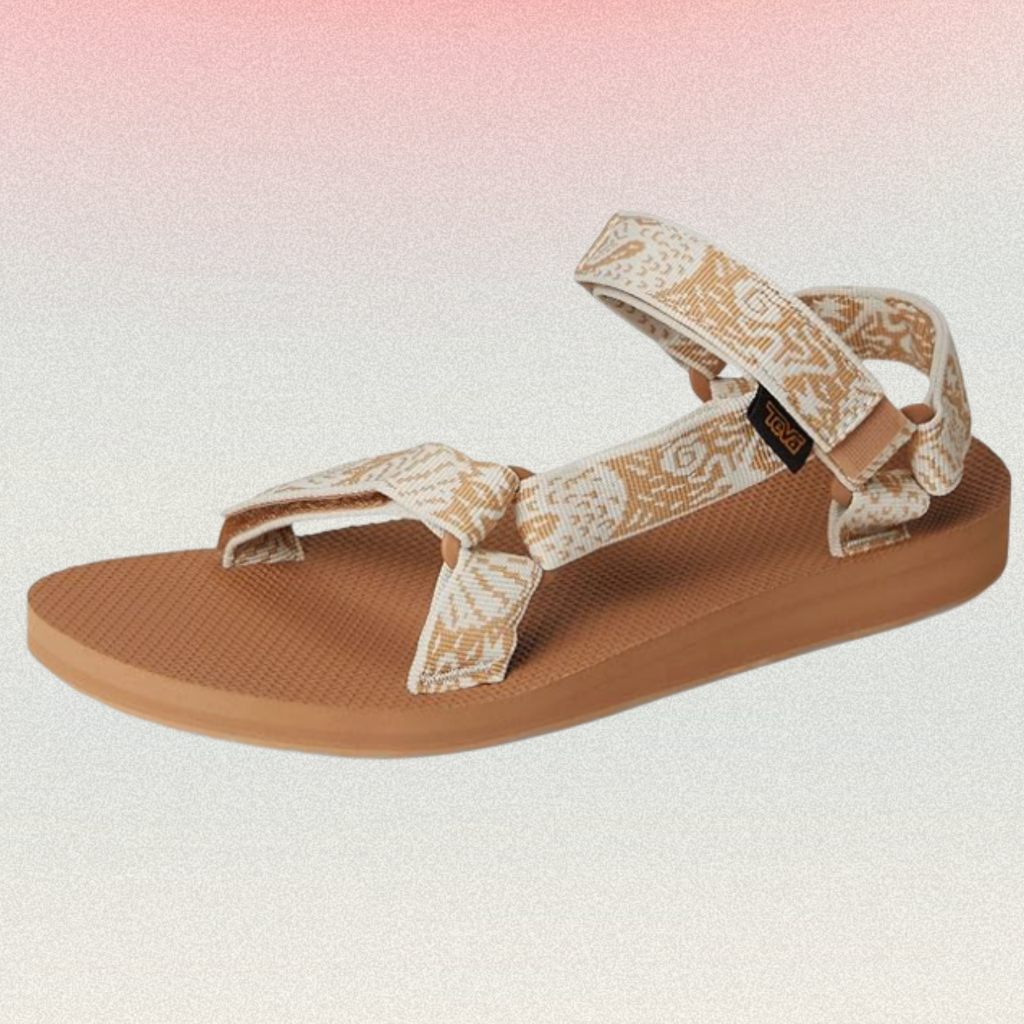
Teva Universal: Spending another year hooked on my Teva Universals, these got a lot of wear and tear! Their slip-on quality is great for a lot of quick things, and it can be useful that they’re waterproof, but with no support and being made from plastic, these fall into our not walkable category.
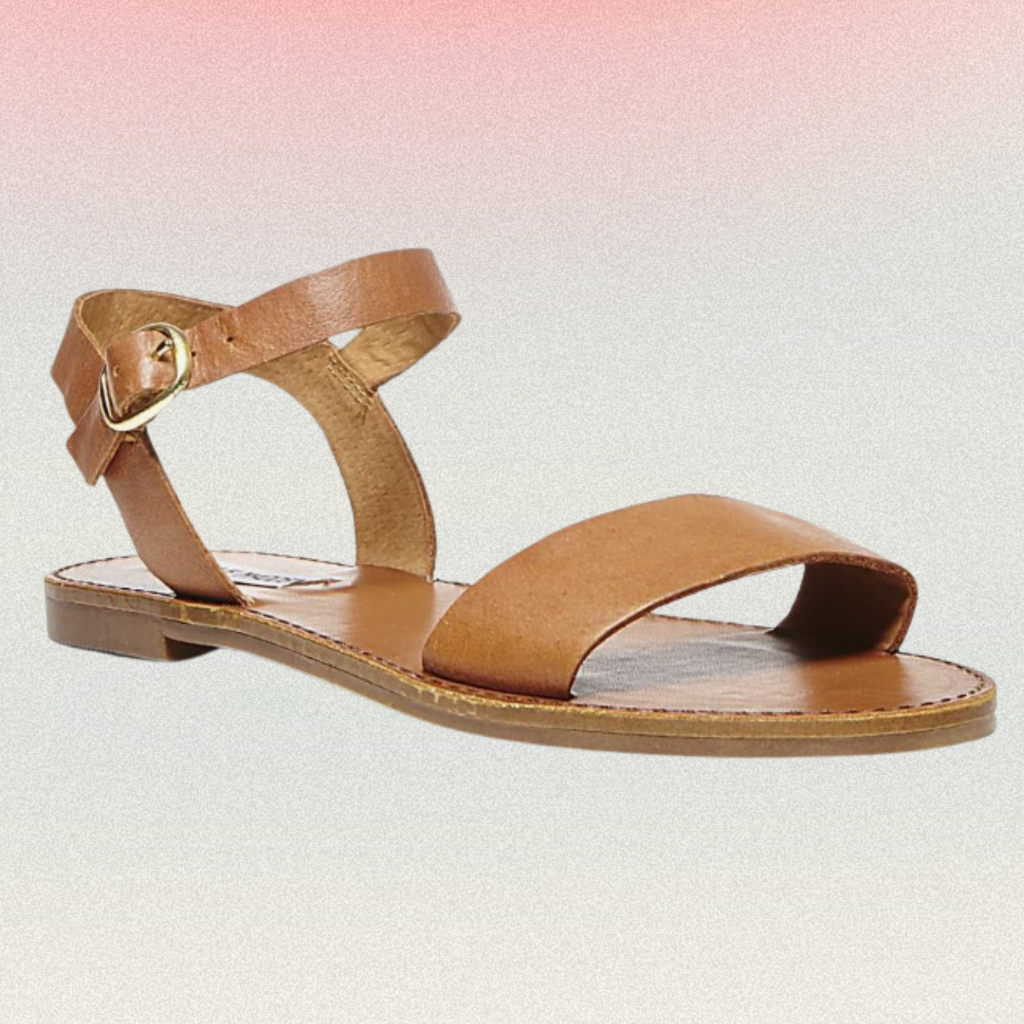
Steve Madden Donddi: I was obsessed with these sandals for about three years, and couldn’t imagine a day I wouldn’t live in them. Fast forward about a decade of wear and tear on my body, I cringe at what I put my legs through everyday wearing the Donddi. Going through several pairs– while they were cute and matched with many outfits– their ultra flat bottoms and lack of support makes them impractical for long walks.
Choosing the Best Walking Sandals for You
All in all, when looking for the best sandals for walking 2026, consider:
- Material: Cork and leather provide natural support and breathability, helping whether you have sweaty feet. But also, if we’re walking around new places all day long– anyone will need these materials for foot skin health.
- Support: Arch and heel support are essential for long walking days.
- Straps: Secure foot placement helps prevent fatigue, discomfort, and musculoskeletal imbalance.
- Style: Versatile designs ensure your sandals work for multiple occasions.
Above all, investing in the right pair of sandals can make travel much more enjoyable. With the options above, you can find the perfect balance of comfort and style for all your adventures in 2026.
FAQ
Are Birkenstocks good for walking all day?
They can be for some people, but they’re not my pick for walking-heavy travel days. The biggest issue (for me) is a stiffer sole that, after 15k steps, can change how naturally your foot moves and leave your legs feeling wrecked. If you love Birks, they’re great as a “casual day” sandal, not your main travel workhorse. For all-day city walking, I personally do better with something that has arch support + cushioning + a sole that flexes a bit.
Are Chacos good for sweaty feet?
Chacos are durable and supportive, but if you’re blister-prone or sweat a lot, the typical issue is the synthetic/plastic footbed. When your foot gets even a little sweaty, that “slick + moisture” combo can turn into rubbing fast. Some people do great in them; my experience has been that they’re better for wet activities than long, hot, pavement days. If you’re sweaty-footed, look for footbeds that feel less swampy (often leather/cork) and straps that don’t create hot spots.
Cork vs leather footbed — what’s better?
Both can work, but they solve different problems. Leather tends to feel less swampy in heat and can be nicer if you’re sensitive to moisture + friction. Cork can feel supportive and comfortable, but quality matters—some cork footbeds can feel like they compress or hollow out over time depending on the brand. If you’re traveling in hot climates or blister-prone, I often lean leather; if you want that classic molded support feel, cork can be great.
How should walking sandals fit?
For travel walking, your sandal should feel secure without you gripping with your toes. Aim for:
- No heel lift when you walk (your heel shouldn’t bounce up)
- Toes not hanging off the front (a tiny bit of space is good)
- Straps that are snug but not tight—no rubbing on bony spots
- Enough room for natural swelling (feet swell on trips, especially in heat)
If it feels “almost comfortable,” assume it becomes a blister at 18,000 steps.
What if I have flat feet / high arches?
If you have flat feet or high arches, prioritize true arch support + cushioning and avoid sandals that make your foot do all the work. Adjustable straps matter here—your foot should feel stable, not like it’s sliding or collapsing inward. And if you use orthotics, look for sandals with a footbed shape that plays nicely with your support needs (or stick to supportive sandals over ultra-minimal styles).